Music Promotion: 12 Ways to Promote Your Music as an Independent Artist
Promote your music with a release plan that works: pitch Spotify's editors, prepare an EPK, contact blogs, radio and curators, post short videos and grow your email list. Avoid fake-stream traps.
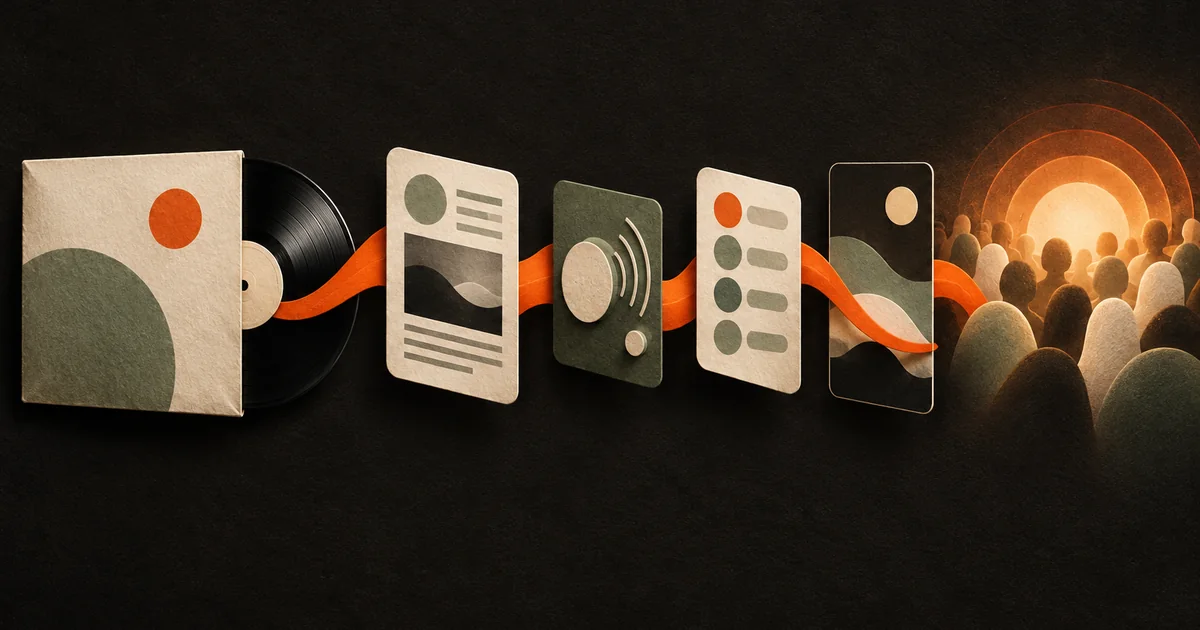
To promote your music, plan the release at least four weeks ahead, then work three channels at once: official pitching (Spotify's editors, radio, blogs and playlist curators), your own audience (social video, email and your artist website) and live and community (shows, collaborations and local scenes). Pitch your song to Spotify's editors at least 7 days before release, prepare an EPK before you contact anyone, and send short, specific pitches to people who already cover your genre. Never pay for guaranteed streams or placements: Spotify prohibits services that sell them.
Start with a release timeline
| When | What to do |
|---|---|
| 6 to 4 weeks before | Finish the master, artwork and metadata; deliver to your distributor; build your EPK |
| 4 to 2 weeks before | Pitch Spotify's editors; research and pitch blogs, radio and curators; plan your videos |
| 2 weeks to release | Post teasers, share a pre-save link, email your list |
| Release week | Post daily, thank every supporter, send the live link to everyone who said yes |
| 2 to 6 weeks after | Follow up once, pitch more curators, release a video or live version |
12 ways to promote your music
1. Pitch Spotify's editorial team
In Spotify for Artists, you can pitch one unreleased song at a time. Spotify says that if you pitch at least 7 days before release, the song goes into your followers' Release Radar playlists. Write a precise pitch: genre, mood, instruments, the story behind the song and where you are from.
2. Build an EPK before you pitch anyone
An electronic press kit gathers your bio, photos, music links, videos, press quotes and contact details on one page. Our EPK template shows what to include.
3. Submit to independent playlist curators
Find curators whose playlists match your sound and whose followers look real. Avoid anyone who sells guaranteed placements. Our Spotify playlist submission guide explains how to vet them.
4. Pitch music blogs
Read a blog's recent posts before you pitch, and use its own submission route. Our guides on how to submit music to blogs and the music blogs directory walk you through it. When an outlet lists a news address for announcements, send it a one-page release instead: our guide shows you how to write a music press release.
5. Contact radio stations
College, community and online stations often play independent artists. Check each station's submission rules. Our radio submission guide covers the process.
6. Post short-form video
Short videos on TikTok, Instagram Reels and YouTube Shorts let people discover your song without knowing your name. Post several clips around one hook: a performance, a behind-the-scenes moment, the story of a lyric. Keep posting after release day.
7. Grow an email list
Social reach changes overnight; your email list stays yours. Offer something real, such as an early listen, and send one short email per release.
8. Keep your artist website current
Your website is where press, bookers and fans check you out. Put your latest release, EPK, tour dates and contact at the top.
9. Collaborate with other artists
A feature, remix or split release introduces you to another artist's listeners. Pick artists whose audience overlaps yours.
10. Play live and film it
Shows build real fans and give you content. Film one song from every show for your channels.
11. Tag your tracks for DJs and curators
Some curators and DJs sort by key and tempo. Check your song's key with the song key finder and include key and BPM in your pitch notes. Still writing the next one? Sketch chords in that key with the chord progression generator.
12. Follow up once, then move on
Send one polite follow-up about a week after your pitch. If you get no reply, move on and keep your list of who you contacted.
What to avoid
- Guaranteed streams or placements. Spotify prohibits third-party services that promise streams or playlist placement in exchange for money, and it treats bot-driven listening as artificial streaming. Its artificial streaming guidance lists the warning signs.
- Mass emails. Generic pitches to hundreds of contacts get ignored or marked as spam.
- Releasing without a plan. A release with no pitching window loses its best chance at editorial playlists.
For the bigger picture, including goals and budget, read our music marketing strategy for independent artists.
Run your release outreach with Outchorus
Pitching is where most release plans stall: finding the right contacts and writing a message for each one. Open Outchorus for your next release, review the sourced radio, playlist, press and label contacts and the evidence attached to each one, and approve the recipient and the exact message separately before anything goes out. Outchorus can also prepare your multilingual artist website and EPK for the release.
Common questions
How can I promote my music for free?
Pitch Spotify's editors, contact blogs, radio and curators who accept free submissions, post short videos, and build an email list. It costs time, not money.
How far in advance should I promote a song?
Start four to six weeks before release. Spotify needs your pitch at least 7 days before release, and blogs and radio often plan further ahead.
Does paying for Spotify promotion work?
Avoid any service that guarantees streams or playlist placements; Spotify prohibits them. Put your budget into ads you control, video, or a publicist with a real track record.
What is the best way to promote music on social media?
Post short videos consistently around one hook of your song, reply to comments, and keep posting after release week.