EPK Template for Independent Artists: Every Section You Need
Build a concise electronic press kit with a release story, approved music links, photos, credits, contact details, and a one-page quality check.
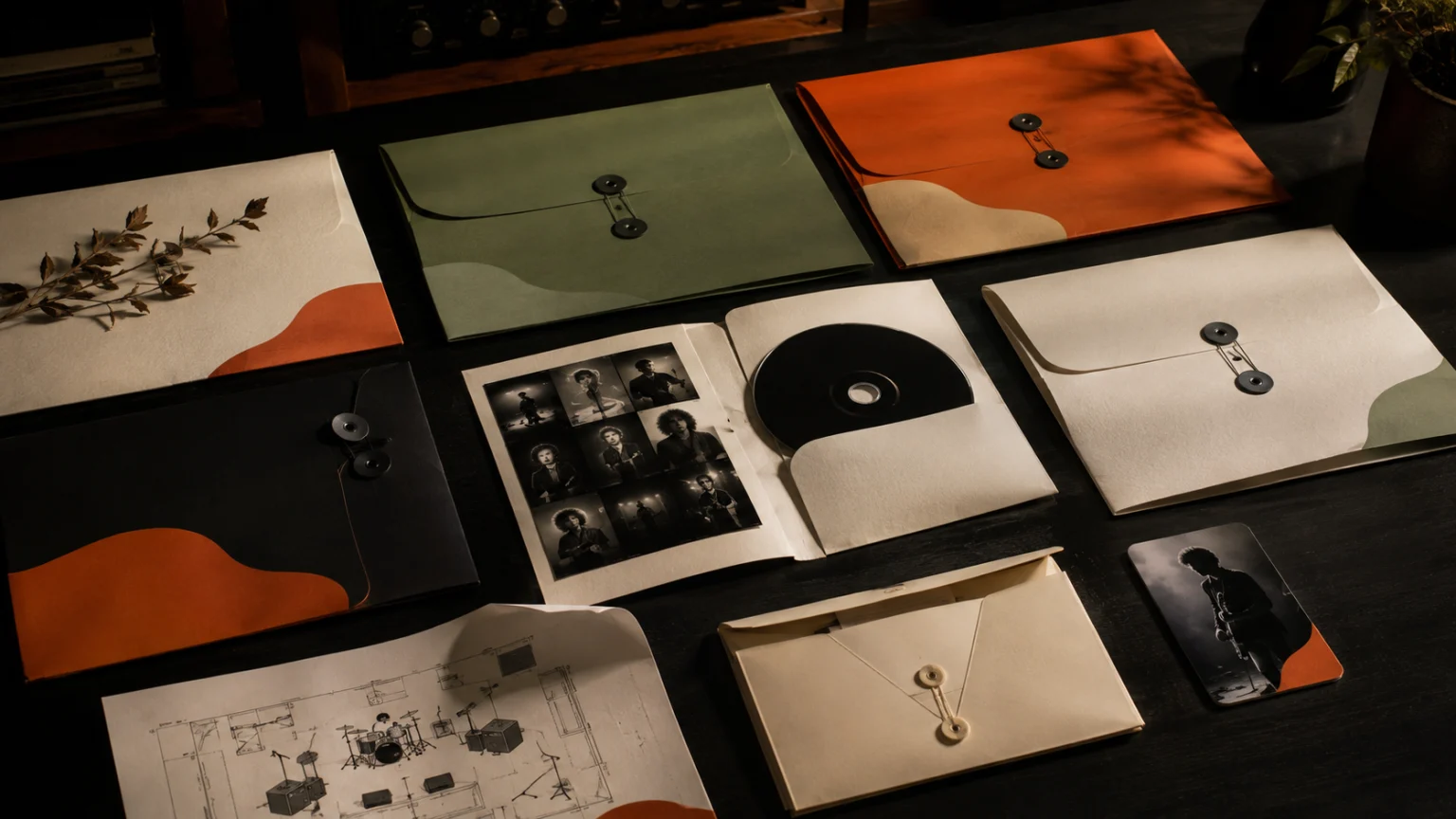
An electronic press kit, or EPK, gives a journalist, radio producer, booker, curator, or collaborator the verified material they need to understand and cover your music. Keep it focused on the current release or booking purpose. Include a short positioning line, biography, release story, listening link, approved photos and artwork, credits, selected proof, social links, and one reliable contact.
Copy the template below into a web page or document, replace every bracketed instruction, remove sections you cannot support, and test every link before you share it.
Copyable EPK template
[ARTIST NAME]
[One-line description of the sound, scene, place, or current project]

CURRENT RELEASE
[Release title] | [single, EP, album, video, or live project]
[Release date] | [label or self-released]
[One public or private listening link]

THE STORY
[80 to 150 words explaining what the release is, who made it, and why it matters now]

SHORT BIO
[50 to 80 words]

FULL BIO
[150 to 250 words]

ASSETS
[Approved press-photo folder]
[Cover artwork]
[Music video or live video]
[Lyrics or translations when relevant]

CREDITS
[Writers, performers, producers, engineers, featured artists, visual collaborators]

SELECTED PROOF
[Up to three verified quotes, broadcasts, performances, playlist placements, or awards]

LINKS
[Official site]
[Primary listening profile]
[Current social profiles]

CONTACT
[Name]
[Role]
[Email or published professional route]
[Territory and time zone when useful]
Put the current job at the top
An EPK for a single release should lead with that release. A booking EPK should lead with the live proposition, suitable rooms, stage requirements, and representative performance video. A sync brief should make rights, instrumental versions, clean versions, stems, and clearance contacts easy to find.
Do not force one generic kit to serve every recipient. Keep the verified artist facts stable, then change the order and relevant assets for the job.
Recipient decision matrix
| Recipient | Lead with | Required working detail | Hold the send when |
|---|---|---|---|
| Press or blog | Current release angle and a reusable short bio | Embargo status, approved captions and photos, exact credits, attributable proof | The angle is generic, a quote has no source, or image permission is unknown |
| Radio | A broadcast-ready track link and release facts | Duration, date, label, identifiers where available, pronunciation, clean or explicit status | The link needs your login, the version is unclear, or metadata conflicts |
| Venue or booker | Representative live video and a clear live proposition | Suitable room context, set length, recent shows, stage plot, input list, rider, technical contact | The video does not represent the act or production needs are missing |
| Festival | Live proof and the exact available set | Set and changeover time, party size, travel base, access needs, current production documents | The team cannot confirm timing, staffing, or technical delivery |
| Sync or industry | Searchable track metadata and the creative fit | Writers, performers, master owner, publishing owners, clearance contact, one-stop status or explicit unknown, alternate versions | Rights ownership or the correct clearance route remains assumed |
One field can mean different things in each branch. “Links” means a press-ready stream for a journalist, broadcast-ready audio for radio, a representative live performance for a booker, and controlled audio versions for sync. Label the job instead of sending an unexplained folder.
Write the one-line position
Use one sentence that another person can repeat accurately. Build it from concrete elements:
- musical territory or genre, without stacking six labels;
- place or scene when it genuinely shapes the project;
- distinctive instrumentation, voice, or process;
- the current release or live context.
Avoid “unique sound,” “genre-defying,” “next big thing,” and unsupported comparisons to famous artists. A useful line helps the recipient place the music before they press play.
Tell the release story in 150 words
Answer:
- What did you release?
- Who made it?
- Which idea, event, place, or collaboration shaped it?
- Why are you sharing it now?
- Which link lets the recipient hear or see it immediately?
Do not retell your entire career. Give the recipient a current angle they can verify. If a claim involves another person, label, event, or award, confirm the spelling and permission.
Filled miniature example
MARA VEIL
Nocturnal electronic songs built from prepared piano and field recordings.

CURRENT RELEASE
Glass Stations, single, 18 September 2026, self-released
Private no-login stream: [tested link]

PRESS ANGLE
The track turns overnight train recordings from the Bucharest to Vienna route into its percussion. The named recording locations and collaborator credits are approved below.

SHORT BIO
Mara Veil is a Bucharest electronic artist combining prepared piano, voice, and location recordings. Glass Stations is her first release built around a single overnight route.

APPROVED ASSETS
Horizontal and vertical photos, caption, photographer credit, usage note: [folder]

CONTACT
Alex Ionescu, press contact, [published route], Europe/Bucharest
This fictional press example shows structure, not proof. Replace every fact and link. For radio, booking, festival, or sync, the builder replaces the press-specific questions with the operational facts that recipient needs.
Use a short bio and a full bio
The short bio should work in a listing, introduction, or first paragraph. The full bio can add chronology, development, selected work, and context.
Keep both in third person when you want recipients to reuse them easily. Update old future tense after the release. Remove unsupported superlatives and platform numbers that change too quickly.
Apple Music for Artists lets artists personalize their profile biography and promotes accurate artist information as a way to connect with listeners: review the official artist resources. Your EPK bio and platform bios should agree on names, current releases, and essential facts.
Prepare approved visual assets
Give recipients a small, labeled folder:
- one horizontal press photo;
- one vertical press photo;
- square release artwork;
- photographer and artwork credits;
- usage note and expiration when rights are limited;
- captions that identify everyone correctly.
Provide high-resolution originals and lightweight previews. Do not embed only a social-media screenshot. Do not give a folder of fifty nearly identical images and ask the recipient to choose blindly.
List credits and rights accurately
Record the exact spelling and role for writers, performers, producers, engineers, featured artists, photographers, directors, designers, label, publisher, and distributor where relevant.
Copy the writer names and shares from a signed split sheet. If your co-writers have not signed one yet, fill one in with the free split sheet generator so your EPK, your release and your PRO registrations name the same people.
Separate creative credits from rights clearance. If someone needs permission to use audio, artwork, lyrics, or video, name the correct contact and territory. Do not imply that an EPK grants rights by itself.
Use proof selectively
Choose up to three items that help this recipient understand the project:
- a short attributed press quote;
- a confirmed radio play or session;
- a relevant live appearance;
- a verified award or nomination;
- a platform placement you can document.
Link the source when possible. Keep quotes short and exact. Remove vague logos, expired claims, and numbers you cannot verify.
Make contact simple
Include one person, role, professional route, and relevant territory. If booking, press, and rights contacts differ, label them. Do not expose personal details that the recipient does not need.
Test the form or address from another device. A beautiful kit with a broken contact route cannot do its job.
Build and review the EPK in Outchorus
Outchorus can prepare a multilingual artist site and EPK, organize release assets, and connect those materials to sourced music-industry opportunities and reviewed outreach. Add the verified release facts and approved assets, review the generated page, then approve recipients and exact messages separately before anything is sent.
Outchorus does not guarantee coverage, playlists, radio play, bookings, or replies. You decide which contacts fit and which outreach leaves your control.
One-page quality check
Open the recipient-specific EPK builder to select press, radio, booking, festival, or sync. Confirmed evidence uses field-specific records, not a free-text detail box. Radio records an audio asset, format, sample rate, bit depth, version, duration, release date, label, and ISRC. Live records separate performance links, dates, set length, capacity range, configuration, current stage and input artifacts, changeover, party size, access state, and technical contact. Sync records track metadata, repeatable master and publishing parties whose positive shares total 100%, a clearance contact, an explicit one-stop controller and confirmer, and cleared alternate-version assets. Press records embargo state, a versioned bio, photo credit and usage rows, and claim-linked proof sources. Unknowns and incomplete rows block recipient-ready copy. You can still download working notes. The builder records what you enter and never claims to verify links, rights, assets, or recipient interest.
Before you send the link, confirm:
- the artist and release names match every platform;
- the release date and status are current;
- the listening link works without an unnecessary login;
- the first screen explains the current project;
- biographies contain no stale future tense;
- credits use approved names and roles;
- photos include usage and credit information;
- proof links reach the claimed source;
- contact reaches the right person;
- the page works on a phone;
- large downloads are optional;
- private links have the intended access settings.
Common EPK mistakes
| Mistake | Better decision |
|---|---|
| A life story before the current release | Lead with the recipient's current job |
| Five streaming embeds that load slowly | Use one primary player and labeled alternatives |
| Uncredited images | Add creator, usage, and caption information |
| Every press mention ever received | Select the three most relevant verified items |
| One PDF that becomes stale | Keep a stable web page and offer a downloadable version |
| Automatic mass outreach | Review the opportunity, recipient, and exact message separately |
Choose web, PDF, or both deliberately
A web page is easier to keep current and can let a recipient play or download only what they need. A PDF gives someone a stable snapshot but becomes stale quickly and can hide broken external links. If you provide both, put a checked date and version on the PDF and keep the web page as the current source. Do not embed large audio files inside the PDF.
Run the delivery test from a signed-out phone on an ordinary connection. Open the first listening or live link, one high-resolution asset, the contact route, and any technical download. Record the check date. A checkmark means that you performed that test, not that the builder independently verified it.
Edge cases that need an explicit answer
- Unreleased music: state the embargo and access rule. Do not imply that a private link grants permission to share it.
- Multiple rights owners: name the correct master and publishing contacts. Leave one-stop status unknown until every owner confirms it.
- No press quotes yet: omit the section. Do not substitute logos, unsourced praise, or platform numbers without context.
- Two live configurations: provide a technical pack for each and make the booked configuration unmistakable.
- Name or lineup change: update the biography, captions, credits, stage plot, contact, and old downloadable files together.
- Recipient requests an attachment: send a lightweight current PDF and keep large approved assets behind direct no-login links.
Sources and inspection method
- MusicNSW: Electronic Press Kit Essentials
- Improvised Music Company: Creating an EPK for Musicians
- APRA AMCOS: From Stage Plot to Soundcheck
- International ISRC Registration Authority: ISRC Handbook
- The Mechanical Licensing Collective: music-industry terms
We inspected current US English EPK template results on September 4, 2026, using the queries and direct result URLs recorded in the checked-in evidence matrix. Leading templates cover biography, music, images, proof, and contact well. Specialist live-production pages explain stage plots and input lists, while the International ISRC Registration Authority and The MLC establish narrower identifier and rights boundaries. The recurring omission was one record that changes by recipient and preserves each critical unknown. This article and builder add that decision layer without claiming that a complete kit guarantees coverage, airplay, bookings, licensing, or replies.
Final structure
The strongest EPK answers five questions quickly: Who are you? What is happening now? Why might this recipient care? Which assets can they use? How do they contact the right person?
Once the kit answers those questions, stop adding decoration. A clear, current, accurate EPK gives your music a better working surface than a long document that hides the release.